
Integration
Integration Course
Are you looking to build a career in the fast-growing world of enterprise integrations and automation?
You’re in the right place! Our Integration Course helps you master system-to-system connectivity, API development, data flow automation, and platform integrations used across modern organizations.
Gautham Digital Learning offers a comprehensive Integration Course designed to equip you with real-time, hands-on skills needed to connect applications and streamline business processes.
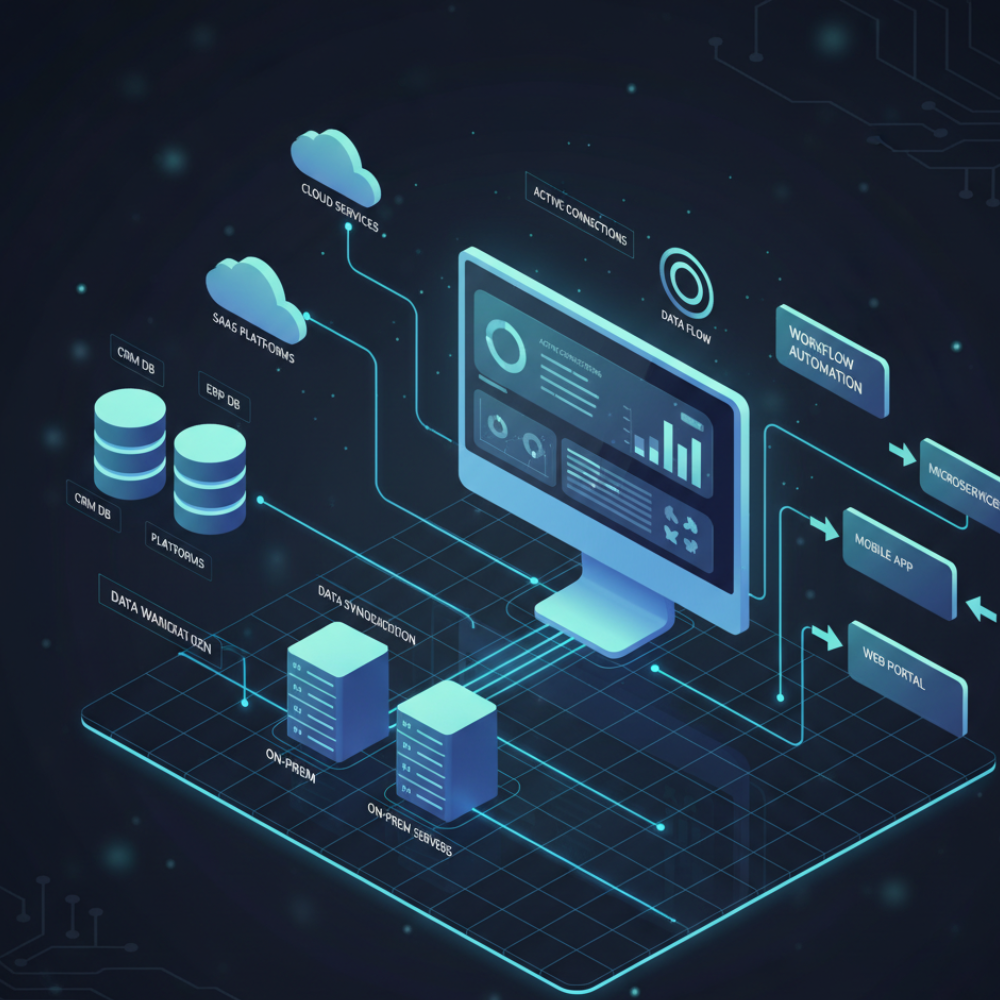
About Integration Course
Back-End Integration Development
Core Integration Concepts: Core Integration concepts cover the fundamental principles of connecting systems, enabling communication between applications, and ensuring consistent data flow. This includes understanding APIs, web services, authentication methods, and data formats such as JSON and XML. Mastering these fundamentals is essential for building strong integration solutions.
API Development & Management: API Development involves designing, creating, and managing APIs that allow systems to communicate. This includes REST API design, endpoint creation, request/response handling, security protocols, and API versioning. Learning APIs opens opportunities to integrate multiple enterprise platforms effectively.
Data Transformation & Mapping: Data transformation concepts help convert information from one system format to another. You will learn mapping techniques, field-level transformations, data normalization, parsing, and validation. These skills are crucial for integrating applications that use different data structures.
Integration Tools & Platforms: Integration platforms like MuleSoft, Dell Boomi, ServiceNow IntegrationHub, and custom middleware solutions enable scalable system connectivity. You will learn how to configure connectors, create integration flows, schedule jobs, and manage cloud/on-premise integrations.
Database Integration: Database Integration covers connecting applications with SQL and NoSQL databases, performing CRUD operations, handling data sync, and managing ETL processes. Understanding how systems interact with databases is essential for building reliable integration workflows.
Workflow Automation: Workflow automation teaches you to build end-to-end automated processes using triggers, rules, events, and orchestration. This helps reduce manual work and ensures smooth business operations across departments.