
JavaScript: The Complete Guide
JavaScript is the heart of modern web development. From interactive websites and mobile apps to backend systems, automation tools, and even AI-driven interfaces, this powerful language drives almost everything you see online today. If you’re exploring the JavaScript Complete Guide to build a strong foundation, you’re already taking the right step.
Whether you’re a student, a beginner, or a working professional looking to switch careers, learning JS can open doors to high-paying jobs, freelance work, and full-stack development opportunities.
This full-length blog covers:
- Key features
- How JavaScript works
- Real-world applications
- Essential concepts (Beginner → Advanced)
- Frameworks and libraries
- Career opportunities
- FAQ section
Let’s dive in!
What Is JavaScript?
A high-level, dynamic programming language, JavaScript (JS), is primarily used to make web pages interactive. While HTML structures the page and CSS styles it, JavaScript makes everything come alive — animations, forms, dynamic content, pop-ups, sliders, and more. In the JavaScript Complete Guide, this forms the core foundation for beginners, helping them understand how JavaScript transforms static pages into rich, responsive, and user-friendly experiences. Whether you’re learning JavaScript for beginners, exploring modern JavaScript, or starting your journey into front-end development, mastering this concept is essential.
Initially created for browsers, JavaScript now runs everywhere thanks to Node.js, turning it into a full ecosystem.
Why JavaScript Is So Important Today
1. Runs Everywhere
- Browser
- Server (Node.js)
- Mobile apps
- Desktop apps
- IoT devices
- Cloud functions
2. Fastest-Growing Tech Skills Worldwide
Most startups and MNCs rely heavily on JS frameworks.
3. Easy to Learn, Hard to Master
The basics are beginner-friendly, but the language also supports complex programming patterns.
4. Huge Community
Millions of developers, thousands of open-source libraries, daily updates.
How JavaScript Works
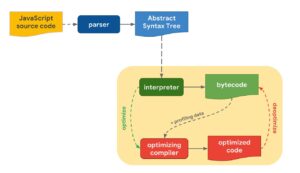
executes inside a browser using engines such as:
- V8 — Chrome, Node.js
- SpiderMonkey — Firefox
JS uses:
- Single-threaded execution
- Event Loop
- Call stack
- Async processing
This architecture makes JS extremely fast and responsive.
Key Features
1. Lightweight & Flexible
Great for quick scripting, dynamic features, and modular coding.
2. Multi-Paradigm
Supports:
- Functional programming
- Object-Oriented Programming (OOP)
- Event-driven programming
3. Asynchronous
Promises, async/await, callbacks—perfect for APIs and real-time systems.
4. Interpreted & Just-In-Time compiled
Provides high execution speed.
Where JavaScript Is Used in the Real World?
- Web applications
- Mobile apps (React Native, Ionic)
- Desktop apps (Electron, Tauri)
- Game development (Three.js, Phaser)
- Backend servers (Node.js)
- Automation and bots
- API development
- Data visualization (D3.js, Chart.js)
- Machine learning (TensorFlow.js)
JavaScript is everywhere.
JavaScript basics to advanced
Below is a full curriculum-style breakdown.
1. JS Basics
- Variables (let, const, var)
- Data types (string, number, boolean, null, undefined, object)
- Operators
- Conditional statements (if/else, switch)
- Loops (for, while, do-while)
- Functions
- Arrays and objects
2. DOM Manipulation (Document Object Model)
This is where the fun begins.
Learn to:
- Change content dynamically
- Modify HTML/CSS using JS
- Handle events (click, keypress, hover)
- Create animations
3. Intermediate
- ES6+ Features
- Arrow functions
- Template literals
- Destructuring
- Spread & rest
- Modules
- Classes
- Error handling
- LocalStorage, sessionStorage
- Timers
4. Asynchronous JS
- Callbacks
- Promises
- async/await
- Fetch API
- AJAX
This is essential for working with APIs.
5. Advanced JS Concepts
- Hoisting
- Scope (local, global, block)
- Closures
- Prototype & inheritance
- Event loop
- Execution context
- Higher-order functions
6. JS Frameworks & Libraries
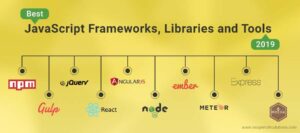
Frontend Frameworks
- React.js (most popular)
- Vue.js
- Angular
Backend
- Node.js
- Express.js
- Nest.js
Mobile
- React Native
- Ionic
Desktop
- Electron
- Tauri
Data Visualization
- D3.js
- Chart.js
7. Tools Every JS Developer Must Know
- VS Code
- Git & GitHub
- Postman / Thunder Client
- Browser DevTools
- NPM / Yarn
- Webpack / Vite
Career Opportunities in JavaScript
- Frontend Developer
- Backend Developer (Node.js)
- Full Stack Developer
- Mobile App Developer
- UI/UX Developer
- Automation Engineer
- Game Developer
- Technical Architect
Average Salaries (India)
- Freshers: ₹3.5 – 6 LPA
- Mid-Level: ₹6 – 15 LPA
- Senior Devs: ₹15 – 30+ LPA
FAQs
- Is JavaScript good for beginners?
Yes. It’s simple, widely used, and offers huge career growth.
- What is the learning curve for JS?
Basic: 1–2 months
Advanced: 4–6 months
- Do I need to learn HTML/CSS first?
Yes, especially for frontend development.
- Can I get a job with JS alone?
Yes—especially with React or Node.js.
- Is JS used in AI?
Yes—TensorFlow.js, Brain.js, etc.
Conclusion: JavaScript
This is one of the most powerful and in-demand programming languages in the world. Whether you’re planning a tech career, building your own projects, or getting into full-stack development, JS is the perfect starting point. If you’re following a Complete JavaScript Roadmap, learning JavaScript step-by-step will help you build strong foundations and move confidently toward becoming a skilled developer.
JavaScript remains the foundation of modern web development, powering everything from interactive websites to scalable applications and even enterprise platforms like ServiceNow. If you truly want to build a future-proof tech career, mastering JavaScript is the smartest step you can take. Our JavaScript Full Course gives you the clarity, hands-on practice, and structured learning path needed to understand JavaScript deeply and apply it confidently in real projects.
Whether you’re a beginner or looking to upskill, the Best way to learn JavaScript in 2025 is through a guided, practical approach that helps you think like a developer, write clean code, and build real-world applications. Start your journey today and unlock endless opportunities in web development, software engineering, and beyond.